
Rental of homologated and calibrated sound level meters.
We rentClass 1 sound level meters with a valid calibration certificateand the capability to perform legal metrology in accordance with current legislation in Spain and Europe.FromMadrid, Barcelona, Lugo, or Marbella, we serve all of Spain within 24 hours.We work exclusively withreputable brands and equipment (CESVA / Svantek). We offer advice and support for your measurements.
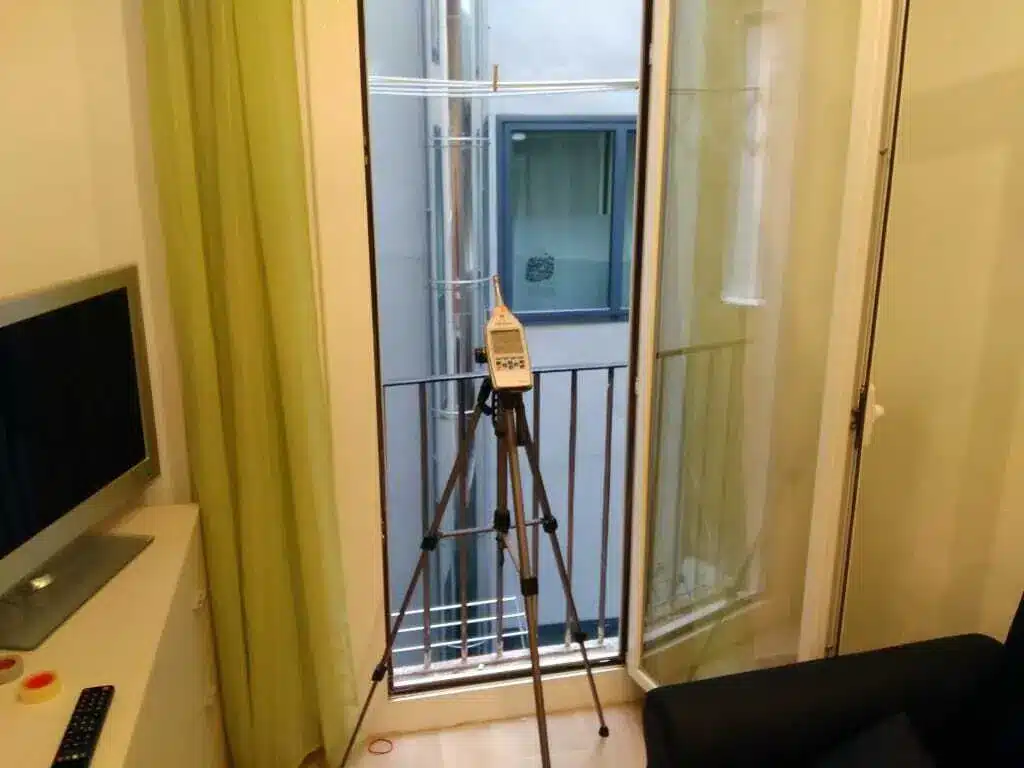
CESVA SC-420 SOUND LEVEL METER / ANALYZER
The sound level meter The Cesva SC-420 is a noise meter suitable for measuring noise levels and sound insulation. It has been approved in accordance with the WELMC regulations currently in effect in Spain. It analyzes noise for monitoring, occupational health, and safety purposes. Its maximum frequency is 20 kHz, which is almost in the ultrasonic range.It also has:
- Spectral analysis capability in thirds of octaves
- Real-time statistical noise analysis
- Possibility of downloading the measurements to PC via USB
- Weighting with the most common filters A, C and Z as well as detection for different types of time situation: Fast / Slow / Impulse
Why rent a sound level meter from K2 Ingenieros?
K2 Ingenieros has been providing professional services in acoustics, noise control, and telecommunications engineering since 1995.We have completed more than 850 projects certified by the Official Association of Telecommunications Engineers and we routinely use this same equipment for acoustic measurements, sound insulation, technical reports, and expert reports.We're not just an equipment rental company: If necessary, we'll show you how to set up the sound level meter (octave-third bands, integration times, displayed factors and weightings), recommend the device you need, and help you download and evaluate the results.Do you need a certified and calibrated sound level meter?
Nationwide delivery. Technical support included. Check availability via WhatsAppSOUND LEVEL METER APPLICATION AREAS
The noise measurement It has become a major public health concern. Most people in today's societies appreciate silence. Through a sound level meter such as the CESVA SC-420 You'll be able to control the most common sources of noise, allowing you to Conduct legally valid noise measurements that enables an understanding of the source of the noise and the possibility of reporting it.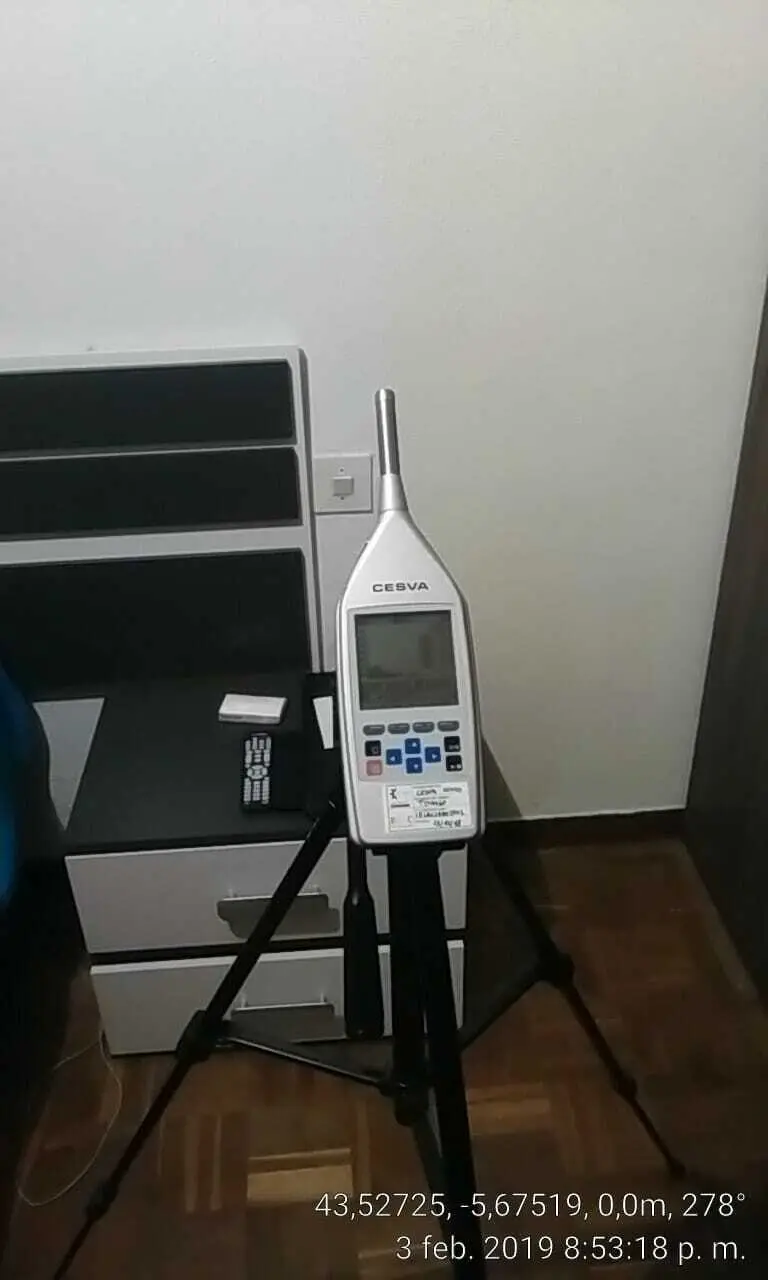
MAIN SOURCES OF NOISE
- Neighborhood noise: Televisions, parties, and illegal activities in apartments; antisocial behavior: sometimes a noisy neighbor can be a serious problem.
- Noisy activitiesMusic bars, concerts, night clubs, discotheques, bars. They frequently do not comply with the regulations. If you are the owner of one of them, you can also hire us to protect your rights and ensure the legality of your establishment.
- Traffic noise and services: Road traffic, toilets, ambulances, etc..: Your home should have a sufficient level of isolation so that all these activities do not disturb you.
- Household installations that generate noise: washing machines, dishwashers, dryers, etc.
UNATTENDED USE
The sound level meter can also be programmed to measure noise automatically if certain thresholds are exceeded or certain conditions are met, so that It is possible to monitor noise for more than 24 hours.NOISE MEASUREMENT IN INDUSTRIES AND ACTIVITIES
A decibel meter also has a wide variety of industrial applications:- Prepare homologation tests for products and machinery.
- Control manufacturing processes.
- Perform noise level controls in the company as part of the health and safety policy.
- Measuring sound over long periods of time: The instrument allows measurements to be stored for more than 24 hours. However, it should be noted that the instrument is not designed to work outdoors or unattended.
NOISE ORDINANCE
In the In most municipalities, the noise ordinance establishes similar limits and conditions. This noise control legislation has been delegated to local municipalities. In most cases, they set 25 dBa as the maximum permissible noise level for bedrooms during nighttime hours and 30 dBa for all other rooms.ADVICE ON NOISE POLLUTION REDUCTION
In case of need, we can help you to reduce noise pollution, intervening in different areas:- Acoustic insulation: Whether it is a noise emitter or receiver.
- Noise control: Noise limiters, noise deflection
- Legal action and defense against noise.
WHAT ARE THE PARTS OF A SOUND LEVEL METER?
The sound level meter or decibel meter basically consists of the following blocks.- Microphone and preamplifier: The microphone picks up the sound to be evaluated, while the preamplifier conditions it for electronic processing. Both components must be calibrated and certified by a professional.
- Signal integration/processing unit: evaluates the sound signal. The sound levelis calculated by weighting it according to different acoustic sensitivity curves(Fletcher-Mundson curves), which account for how sound is perceived depending on its frequency and intensity. The human ear is much more sensitive to noise at mid-range frequencies (which correspond to the human voice) than to high or low frequencies.
- Display: They show the measurement in a convenient way.
- Storage: They store the measured results over time, so that they can be analyzed and interpreted a posteriori.
In order to have a valid noise measurement all these components:
- They must be approved and form part of a single instrument.
- Must be calibrated
- They must be appropriate for the function assigned to them (frequency band, measurement range, noise dynamic range, etc.).
WHAT PARAMETERS DOES THE CESVA SC420 MEASURE?
The SC-420 can measure the perceived noise level using:- Multiple weighting curves, including A, required in most municipal ordinances. Also T and many others
- Storing measurements in periods of up to 24 hours
- Integrate the weighting in the indicated period of time.
- Perform spectral analysis: necessary to calculate the low-frequency or tonal component penalty factors required in municipal ordinance immission calculations.
Laeqis equivalent to the term“Level a-weighted equivalent”In other words: Equivalent sound level calculated using A-weighting. This is specified byIEC 61672-1:2013for sound level meters.A-weightingassigns a weighting to each frequency band that corresponds to the human ear’s sensitivity to those frequencies. Thus, extremely high or low frequencies (which we hear less intensely) are weighted less. With age, sensitivity to high and low frequencies decreases (presbyacusis).This is the most commonly usedweighting.The C-weightinghas a gentler response and is used less frequently.
The Z-weighting is flat: no frequency-based weighting is applied.

COMPETITIVE PRICE AND LONG EXPERIENCE
We have all the instruments and experience for:- Rent, sound level meters. Approved and with current calibration.
- Carry out immission and insulation measurements on walls and facades by ourselves.
- Drafting reports and expert reports for the lawsuit or legal defense.
- Competitive price
ProsFast serviceCertified equipment capable of performing legal metrologySound level meter widely used in Spain (Cesva SC-420)
Cons:Costs must be anticipated
Review Overview
| Speed | |
| Customer service and support | |
| Price | |
| SUMMARY We needed to homologate the sound level emitted by our electricity generation machinery. In 24 hours we had at our disposal the class 1 sound level meter in Murcia for the measurements, with valid calibration certificate. In addition, they advise on its use. | 4.7 |